Bike pumps have come a long way since Hans and Franz made their SNL debut in 1987.
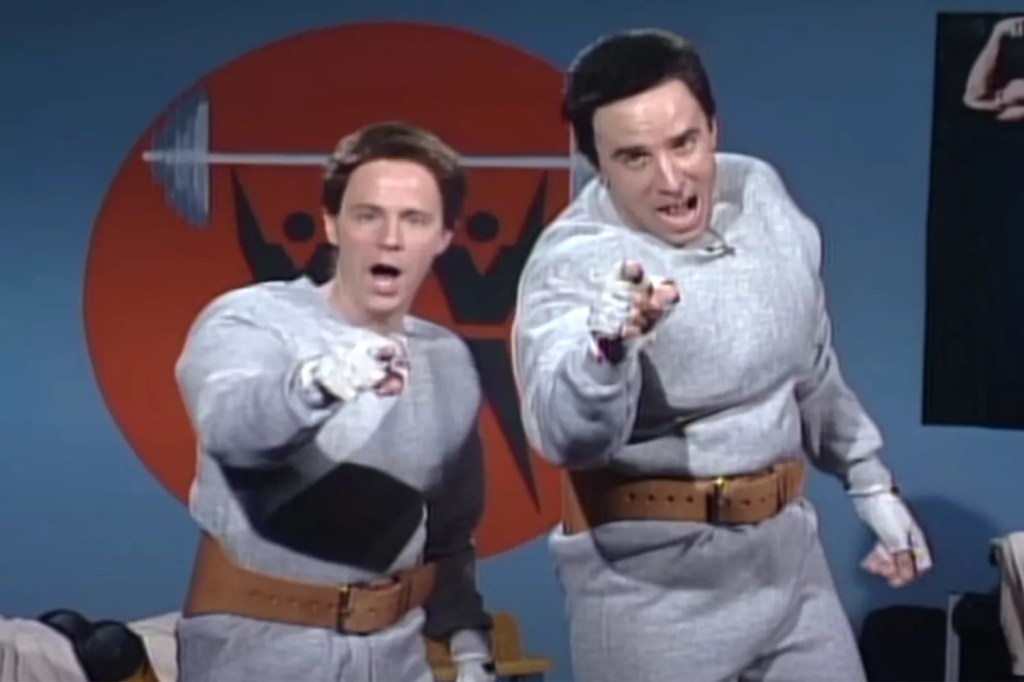
Men of a certain age, my age, have to make this joke. With apologies, it’s just required.
With that out of the way. Ahem.
On the road you have to be able to fix a flat. These days there are two styles of tires out there, the old-fashioned type with inner tubes, and a newer technology where the tires have a sealant inside the air chamber that makes an airtight seal against the wheel without a tube – tubeless.
Even more nostalgia: Back in my day the hotness was the argument between clinchers, tires that are open on the inside and that sit in a groove around the circumference of the rim, and tubular tires that are, no joke here, fully enclosed like a tube and then glued on to the rim. In the 1980s the rich kids ran tubular. Today tubular tires seem to be all but dead.
In both cases flat tires happen. If you use inner-tube style tires then it’s wise to carry tire levers to pry the tire off, a small patch kit that contains tube patches and vulcanizing glue, and a spare tube. Tubeless tires are supposed to be somewhat more resilient because if you get a small puncture, the sealant will ooze into it and seal it back up again. For larger holes the tubeless folks carry a plug tool and small strips of plug material, in the same style as the plugs you can use to make a cheap repair on a car tire.
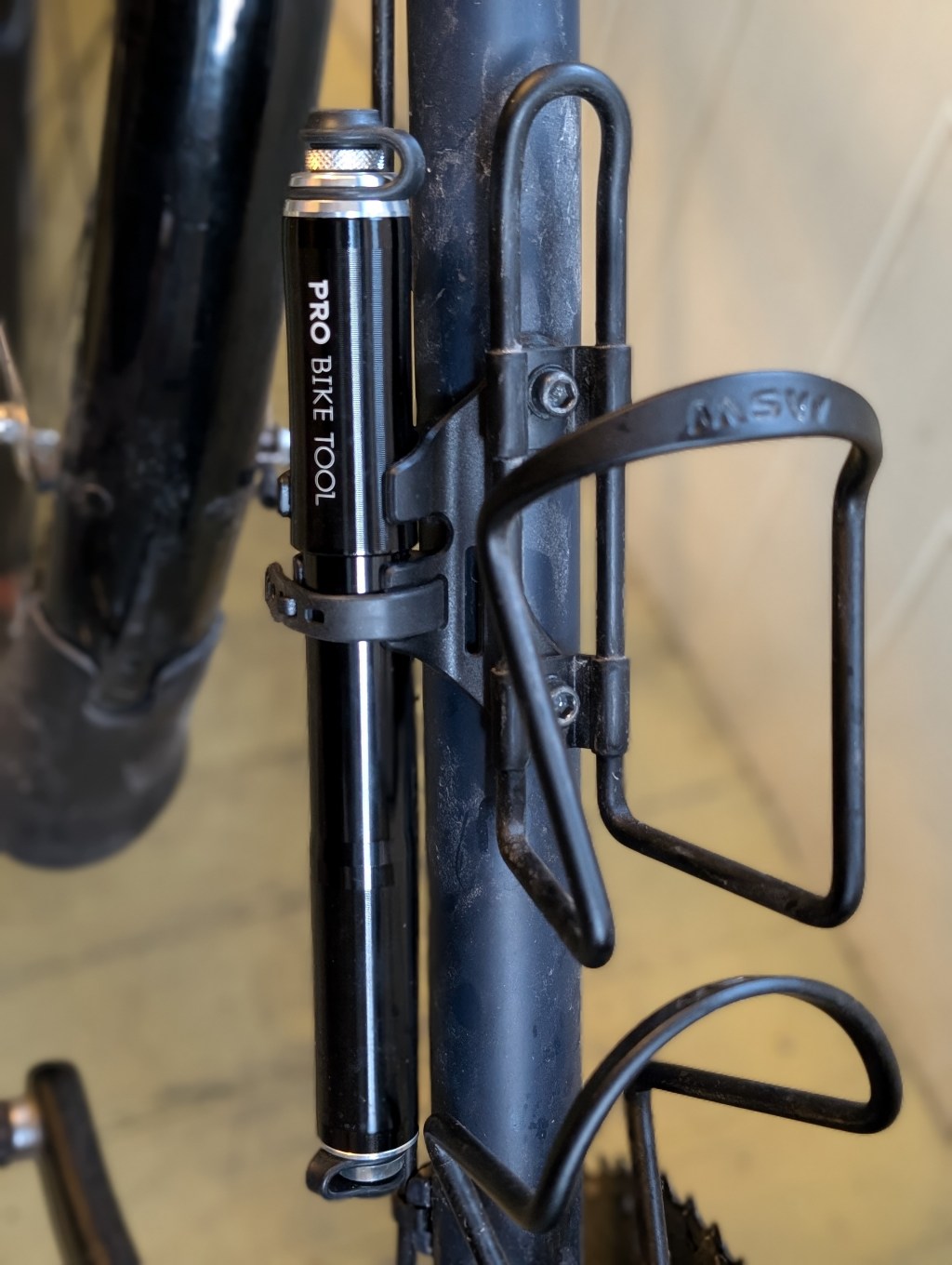
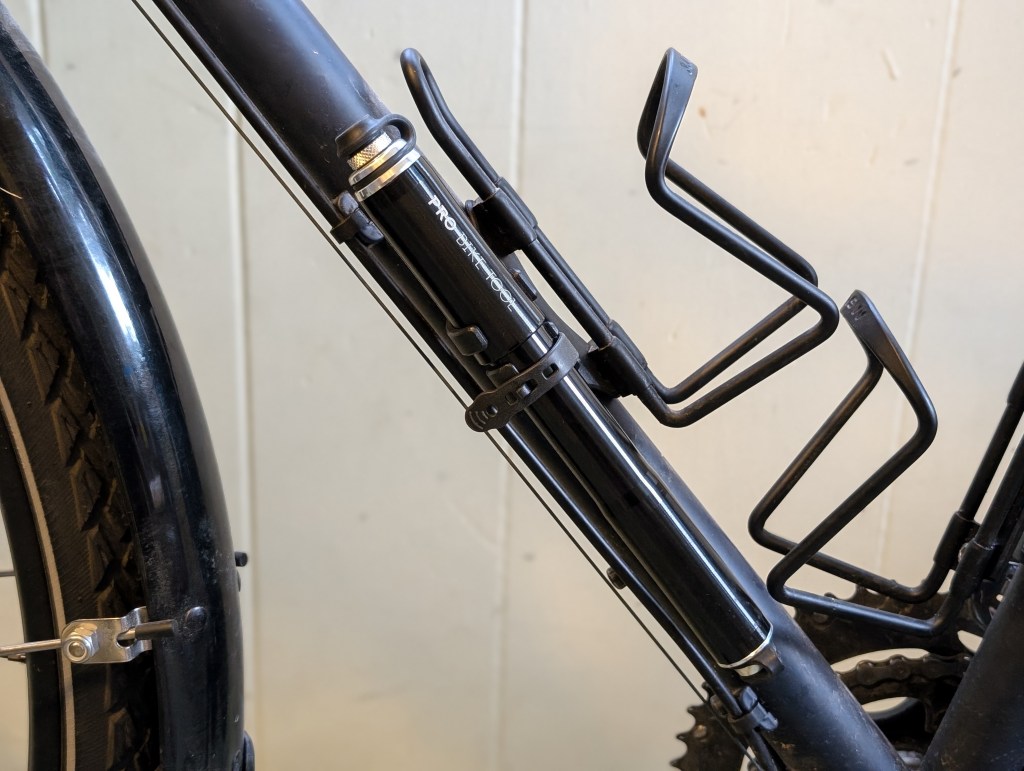
End of lecture. We all need a pump, though, no matter what! I am very pleased with my little Pro Bike Tool Mini Pump.
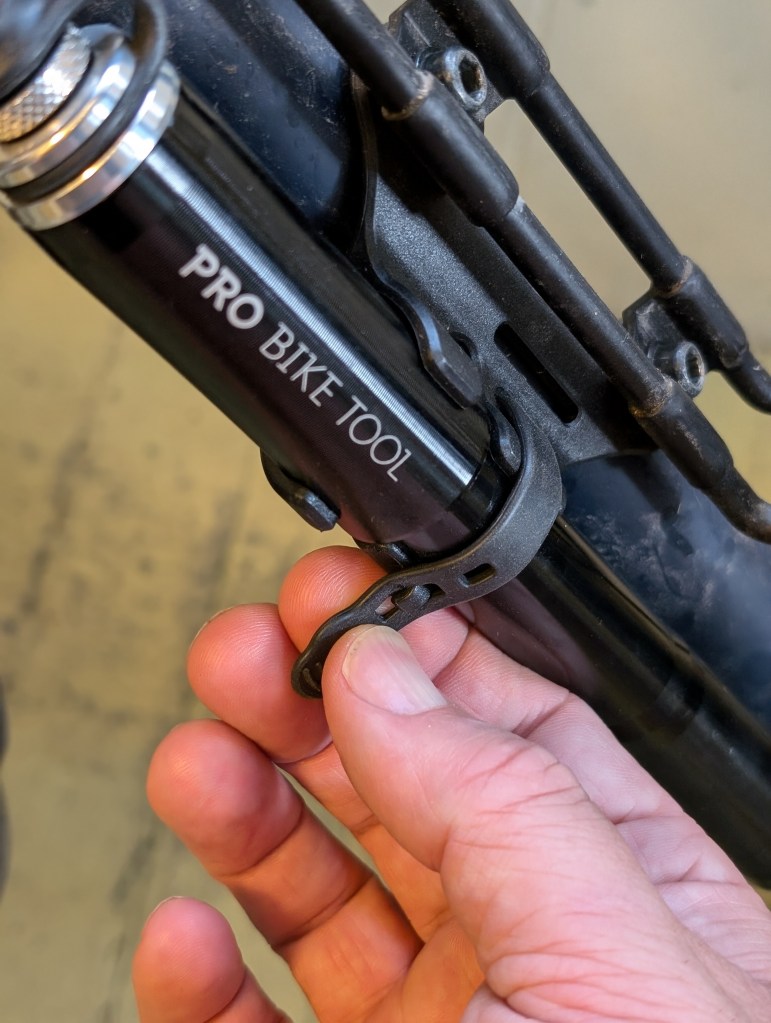
It’s become conventional to mount this style of small pump adjacent to the water bottle cage on the down tub, which works great. It’s tucked out of the way and doesn’t take up valuable frame space that you want for bags or strapping other gear on. This one is shown in the bracket it shipped with, and it rides along there securely and silently.
One feature I love about this specific pump is that there’s a hose, with a built-in pressure gauge, concealed right inside the body where it’s safe from grime or getting lost. Once off the bike, it’s just a matter of popping the protective rubber caps off the ends of the pump, pulling the hose out of one end, and attaching it to the other.
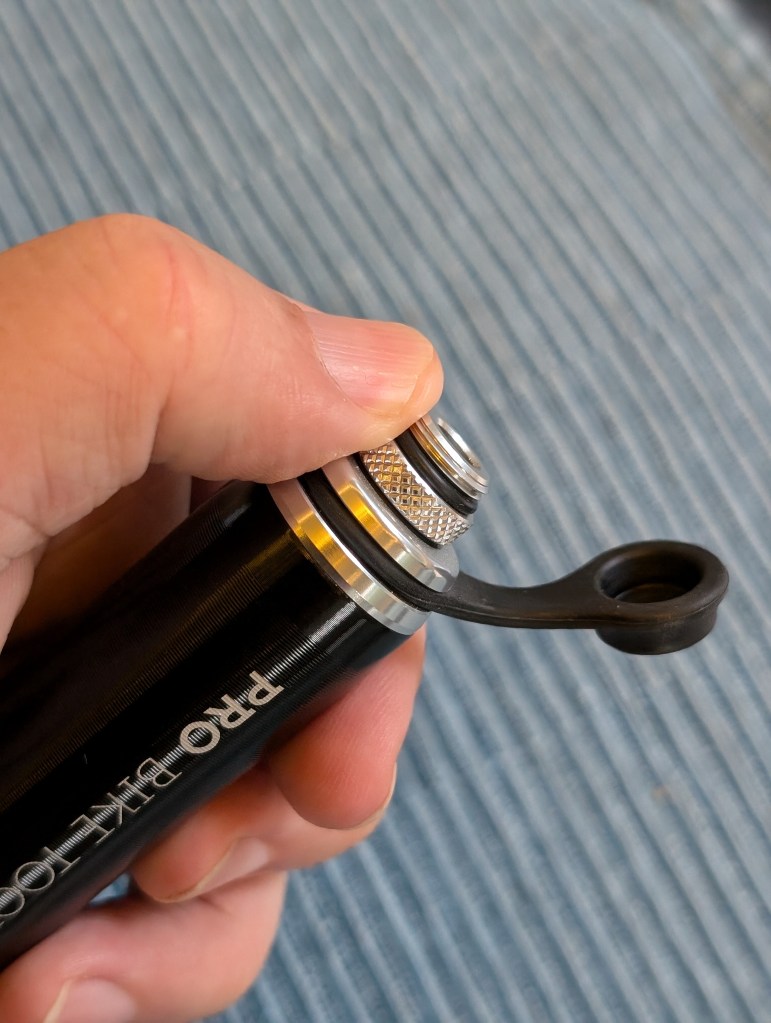
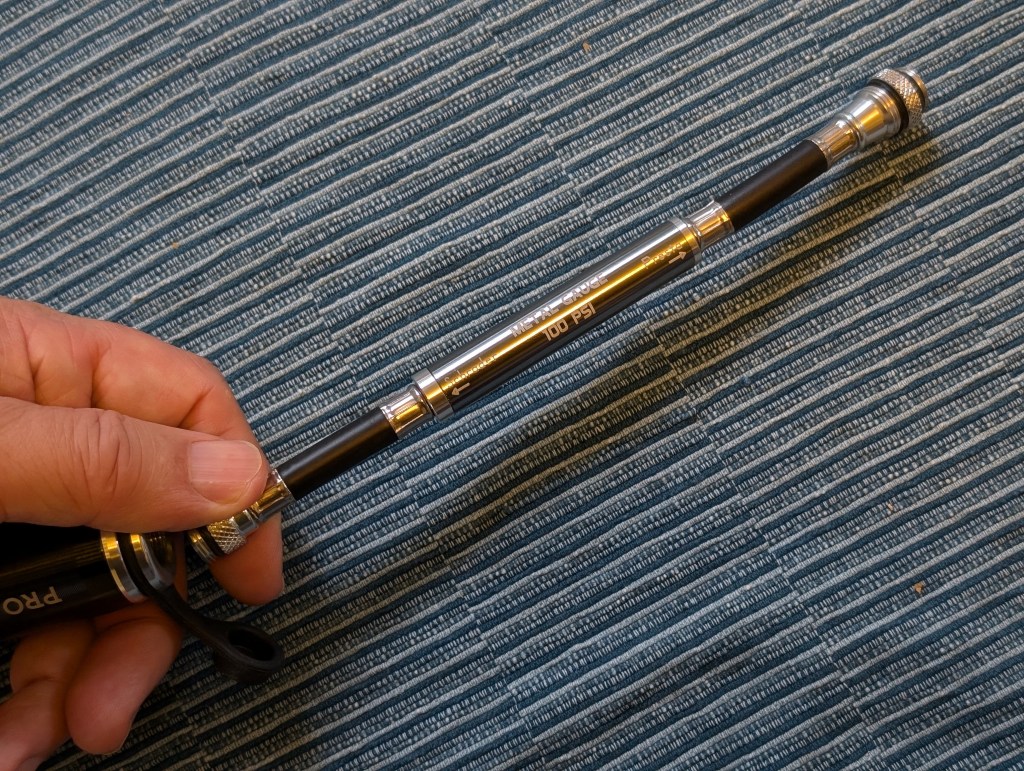
Et voila, pumping a tire. I like the hose a lot better than trying to grab ahold of the wheel and operate the style of pump with no hose, where the end of it is directly affixed to the valve. The gauge here (peeking out in red) is basic but it works.
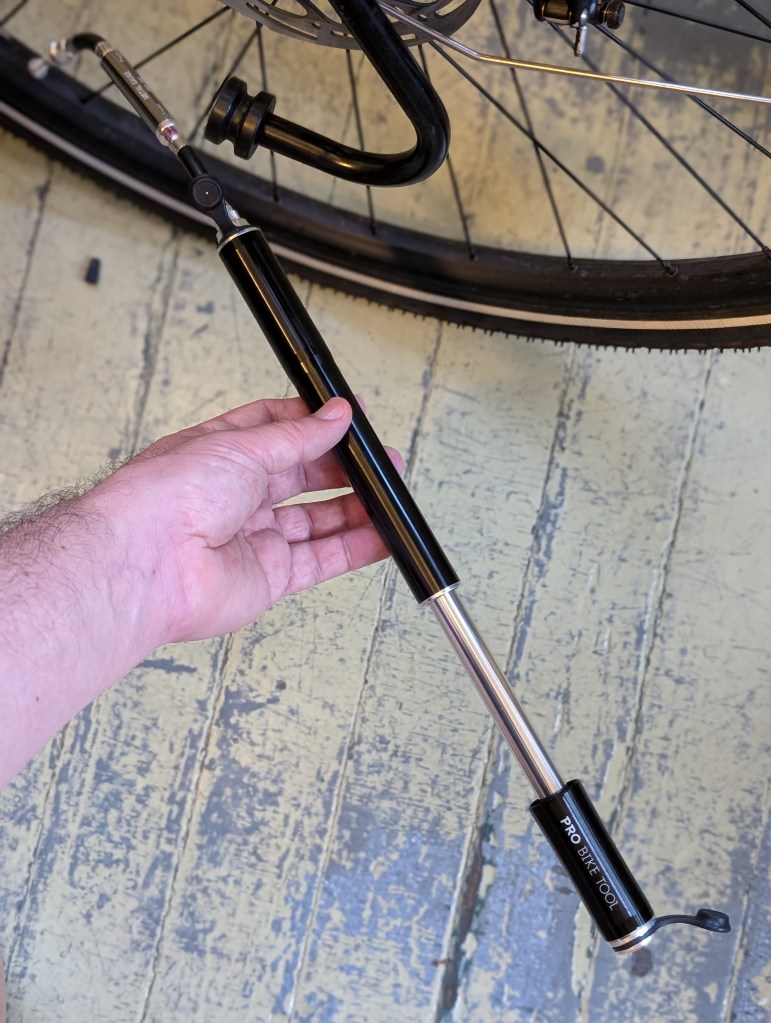
With the mountain bike and fat bike craze some folks are running super-wide offroad tires that need a huge volume of air, but at a lower pressure. Pump manufacturers have tried to accommodate that, so look for HV (high volume) pumps if you have wide tires and don’t want to spend an hour getting enough air in there. I am only running 40mm tires, which are sort of all-purpose road/gravel, so I opted for the smaller HP (high pressure) pump. I only run about 50 psi, which is easy to reach with this little guy.
Lastly, having a full-size floor pump at home makes sense – you would not want to try to use one of these compact jobbies for everything.
 The Pragmatic Cyclist
Leave a comment